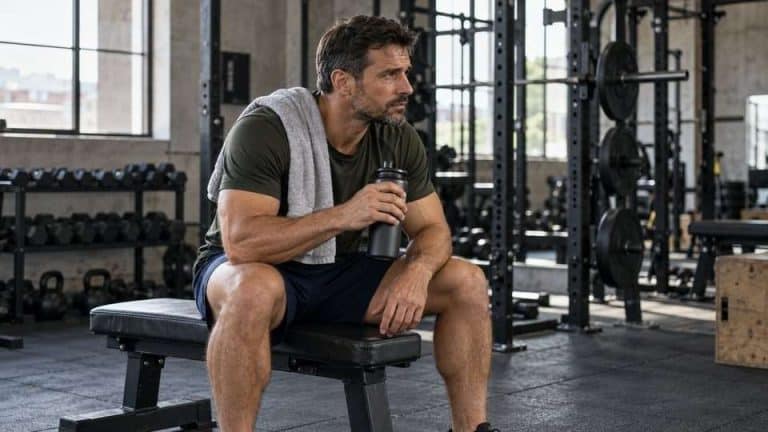
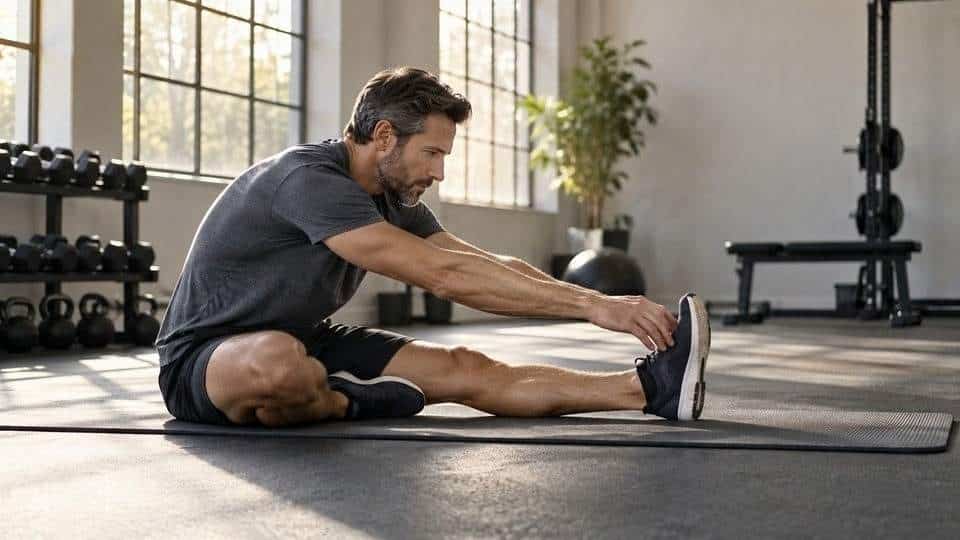
The hours after a workout are when your body starts turning effort into results. Muscle repair ramps up, energy stores refill, and fluid lost in sweat gets replaced. Heavy drinking during this window can impair recovery. Research in men found reduced muscle protein synthesis after a large alcohol dose, even when they also consumed protein.
If drinking has become part of every training day or every game night, information about alcohol addiction treatment for men in Arizona is available when you are ready to look at it.
What Your Body Does After a Workout
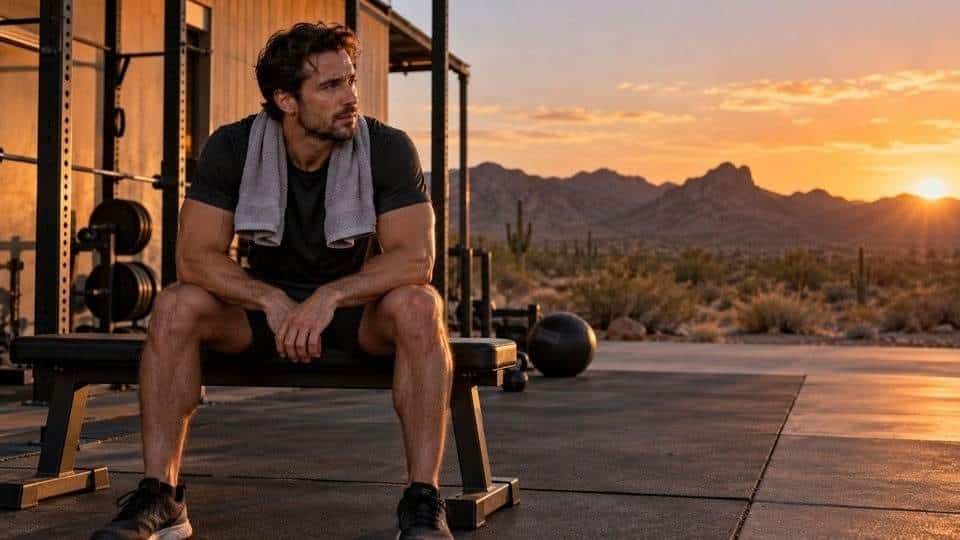
Training stimulates changes in muscle and nervous-system function, while recovery helps the body adapt. Muscle damage can occur, but it is not required for strength or size gains. In the hours after a session, the body raises muscle protein synthesis, refills the glycogen used for fuel, rehydrates, and starts repairing small amounts of muscle damage.
Sleep later that night carries the work forward, and the following days of training build on it. If any part of that chain breaks, you get less out of the session you just finished.
Our guide asking does alcohol stop muscle growth covers the full picture of how drinking affects training. This chapter focuses on what happens when alcohol enters that recovery window.
What Alcohol After a Workout Does to Recovery
Alcohol does not just add empty calories. It actively interferes with the processes your muscles depend on after training.
Muscle Protein Synthesis Drops
The clearest evidence comes from a 2014 study in PLoS One. Eight physically active men completed resistance training and cycling, then consumed 1.5 grams of alcohol per kilogram of body weight. That was about 12 Australian standard drinks, or roughly 8 to 9 U.S. standard drinks for the average participant [1].
Compared with protein alone, muscle protein synthesis was 24 percent lower with alcohol plus protein and 37 percent lower with alcohol plus carbohydrate during the measured recovery period. The carbohydrate condition also lacked the protein provided in the comparison condition. These results concern a large alcohol dose in a small study; they do not establish the same percentage loss from one beer or measure long-term muscle gains.
Hormone Responses Can Change
A 2023 review in Alcohol Research: Current Reviews, published by the National Institute on Alcohol Abuse and Alcoholism (NIAAA), notes that an alcohol binge after exercise lowered the testosterone-to-cortisol ratio in healthy men [2]. These hormones help regulate muscle metabolism, but short-term changes in their ratio do not by themselves prove muscle loss.
Hormonal findings vary across studies, and their contribution to impaired recovery is still being investigated. Our post on alcohol and testosterone explains more about how drinking affects that hormone.
Refueling Slows Down
Hard training drains glycogen, the stored carbohydrate your muscles burn for fuel. A study in trained cyclists found poorer glycogen restoration when alcohol replaced carbohydrate in recovery meals. When carbohydrate intake was maintained, glycogen storage was not significantly lower at 24 hours. The researchers concluded that alcohol’s direct effect was unclear, while displacing recovery food was the main problem [3].
Less stored fuel means less in the tank for the next session.
Dehydration Gets Worse
A workout already leaves you low on fluid, especially after heavy sweating. NIAAA explains that alcohol suppresses vasopressin, a hormone that tells the kidneys to hold onto water, so drinking increases urination and fluid loss [4].
Alcohol can add to fluid losses, but its effect depends on the dose, drink strength, and hydration state. In the Arizona heat, where fluid loss during training is already high, that combination puts more strain on the body.
Repair Signals Get Dampened
After hard training, a short burst of inflammation switches on muscle repair. The NIAAA review reports that binge drinking around resistance exercise dampens that early inflammatory response in trained men, and laboratory studies show alcohol reduces the ability of muscle stem cells to form new muscle tissue.
These findings suggest possible interference with repair, but laboratory mechanisms do not establish how much slower recovery will be for an individual.
What It Means for Your Next Session
The cost does not end the night you drink. In studies summarized in the NIAAA review, heavy drinking the day before reduced lower-body performance in rugby players, and a dose of alcohol shortened time to exhaustion during hard cycling 18 to 24 hours later.
One study cited in the review found peak strength was still lower 36 to 60 hours after strenuous exercise followed by drinking. Heavy drinking can affect later sessions, but results vary with the dose, exercise, and outcome measured; not every study finds reduced strength.
NIAAA also notes that during a hangover, attention, decision-making, and muscle coordination can all be impaired. Heavy lifts and fast movements demand all three, so a hangover is a poor state to train in.
When Drinking After Training Becomes a Pattern
Repeated heavy drinking can harm the muscle itself. The NIAAA review explains that even a single binge can trigger the breakdown of muscle tissue, and that years of heavy drinking can lead to progressive muscle weakness and shrinking fibers. Our chapter on alcoholic myopathy explains the warning signs.
The Post-Game Drinking Culture
The 2014 researchers designed their study because of a familiar pattern: the culture in many team sports involves heavy drinking after training and competition. Men’s leagues, weekend games, and gym crews often end the same way.
That habit can feel like part of the reward. In reality, it cuts into the very results the work was meant to build, often without anyone noticing until progress stalls. Strength plateaus, nagging soreness, and flat sessions are easy to blame on programming when alcohol may be part of the problem.
Some men also train with stimulant-heavy supplements, then drink later the same day. Our chapter on why you should not mix pre-workout supplements and alcohol explains why that combination is especially risky.
What About a Beer After a Workout?
The post-workout beer is a familiar version of this habit. Some men see beer as a way to replace fluids or carbs after training. The evidence does not back that up.
Beer Is Still Alcohol
A 12-ounce beer at 5 percent alcohol by volume (ABV) holds about the same amount of pure alcohol as a shot of liquor or a glass of wine. NIAAA notes that many light beers still have about 85 percent as much alcohol as regular beer, and that some craft beers hold two standard drinks in a single 12-ounce bottle [5].
The amount of alcohol matters, so lower alcohol content can reduce the dose in a serving. It does not make beer a proven recovery aid.
Beer Is Not a Reliable Recovery Drink
Beer contains water, so it is inaccurate to say it provides no hydration. Its alcohol can increase urine output, and fluid retention varies with drink strength, amount consumed, and hydration state. Water, appropriate electrolytes, and recovery food are more dependable choices after heavy sweating.
Beer Carbs Do Not Protect Muscle
Beer carbohydrates are not a substitute for protein and adequate recovery food. In the 2014 study, the alcohol-plus-carbohydrate condition had 37 percent lower muscle protein synthesis than protein alone. Because the conditions also differed in protein intake, this does not isolate the effect of alcohol or show that carbohydrates themselves worsen muscle recovery.
Why Protein Shakes and Water Do Not Fix It
Many men who drink alcohol after training believe a protein shake or an electrolyte drink protects them. In the 2014 high-dose alcohol study, consuming protein supported a stronger muscle-building response than alcohol with carbohydrate, but did not restore the response seen with protein alone. Muscle protein synthesis was still 24 percent lower.
NIAAA adds that research has not found that electrolyte drinks reduce hangover severity, and that there is no cure for a hangover other than time. No supplement, drink, or trick has been shown to cancel out what alcohol does to recovery.
What Actually Supports Recovery
The science on recovery is simple, even if the hard work is not. Muscles rebuild best when you eat enough protein and carbohydrates, stay hydrated, and sleep well. In the 2014 study, protein alone produced the strongest muscle-building response of any condition tested.
Whole foods, water to replace what you lost through sweating, and steady sleep give your muscles the nutrients and rest they need. Athletes and serious lifters focus on these basics because they are the key difference between training hard and actually getting results.
Heavy drinking can interfere with these basics. Leaving alcohol out of your recovery routine avoids that source of risk.
What Changes When Alcohol Is Out of the Picture
The body responds when alcohol is gone. The NIAAA review calls abstinence the most effective treatment for alcohol-related muscle damage and notes that strength improves after quitting, while exercise and protein-rich nutrition may help reduce alcohol’s harm to muscle.
For men who train hard, that means each session can finally get the recovery it earned. Our post on the benefits of exercise in men’s addiction recovery covers why physical work is such a strong tool in sobriety. Sleep, hydration, nutrition, and gradual training all support athletic performance, though quitting alcohol does not guarantee complete muscle recovery.
Frequently Asked Questions About Alcohol After a Workout
Is It Bad to Drink Beer or Alcohol After a Workout?
Heavy drinking after a workout can impair recovery. In a small high-dose study, muscle protein synthesis was 24 percent lower with alcohol plus protein and 37 percent lower with alcohol plus carbohydrate than with protein alone. These findings do not measure the effect of one beer. Alcohol can also disrupt sleep and interfere with recovery nutrition.
Does Alcohol Ruin Your Workout?
Alcohol does not erase a workout. Studies of heavy post-exercise drinking have found reduced muscle protein synthesis and, in some settings, poorer next-day performance or strength recovery 36 to 60 hours later. Other studies found no strength effect. The outcome depends on dose and exercise, rather than a fixed loss from every drink.
Does Drinking After the Gym Affect Muscle Recovery?
Heavy drinking after the gym can reduce muscle protein synthesis, alter repair signaling, increase fluid loss, and disrupt sleep. Effects vary with dose and circumstances; alcohol can also interfere with refueling when it replaces recovery food. NIAAA notes that no drink or supplement has been proven to cure a hangover.
Getting Help
If alcohol keeps showing up after your workouts, or your training has started taking a back seat to drinking, it may be time for a closer look. A doctor can help you understand how drinking is affecting your health.
The Substance Abuse and Mental Health Services Administration (SAMHSA) National Helpline at 1-800-662-4357 is free and confidential. For a mental health or suicide crisis, call or text 988. Into Action provides men’s residential treatment in Phoenix built around structure, accountability, and physical conditioning.
This article is for informational purposes only and is not a substitute for professional medical advice, diagnosis, or treatment. If you drink heavily, talk to a doctor before stopping, because suddenly quitting after heavy drinking can cause dangerous withdrawal. If you are in crisis, call or text 988; in an emergency, call 911.
Sources
- Parr EB, Camera DM, Areta JL, et al. Alcohol Ingestion Impairs Maximal Post-Exercise Rates of Myofibrillar Protein Synthesis following a Single Bout of Concurrent Training. PLoS One. 2014;9(2):e88384. doi:10.1371/journal.pone.0088384. https://journals.plos.org/plosone/article?id=10.1371/journal.pone.0088384
- Simon L, Bourgeois BL, Molina PE. Alcohol and Skeletal Muscle in Health and Disease. Alcohol Research: Current Reviews (National Institute on Alcohol Abuse and Alcoholism). 2023;43(1):04. Published November 2, 2023. doi:10.35946/arcr.v43.1.04. https://pmc.ncbi.nlm.nih.gov/articles/PMC10627576/
- Burke LM, Collier GR, Broad EM, et al. Effect of alcohol intake on muscle glycogen storage after prolonged exercise. Journal of Applied Physiology. 2003;95(3):983-990. doi:10.1152/japplphysiol.00115.2003. https://pubmed.ncbi.nlm.nih.gov/12740311/
- National Institute on Alcohol Abuse and Alcoholism. Hangovers. https://www.niaaa.nih.gov/publications/brochures-and-fact-sheets/hangovers
- National Institute on Alcohol Abuse and Alcoholism. What Is A Standard Drink? https://www.niaaa.nih.gov/alcohols-effects-health/what-standard-drink