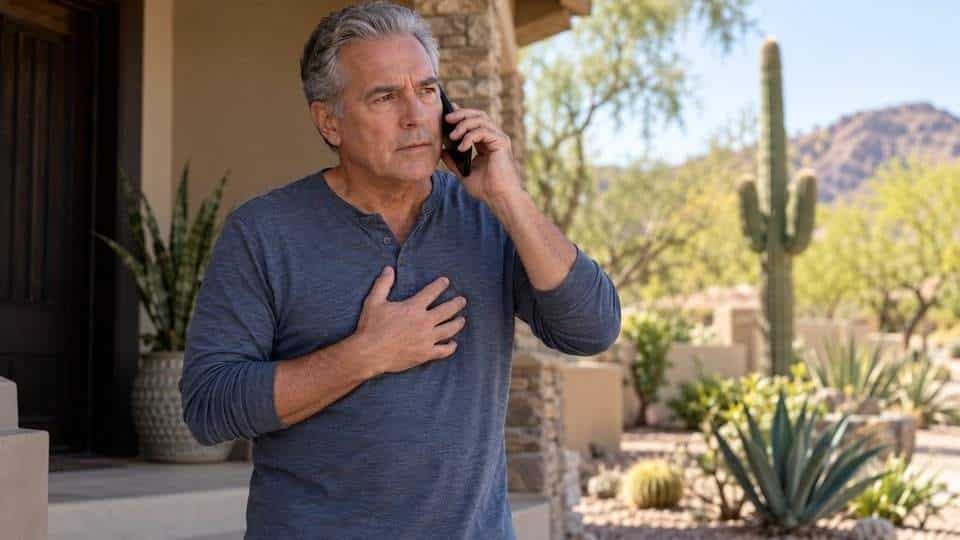
Panic attack vs heart attack is a hard call to make on your own. Both can bring chest pain, a racing heart, and trouble breathing, and you often cannot tell them apart at home. So treat new or unexplained chest pain as an emergency and call 911, even if you are not sure it is your heart [1]. Do not drive yourself, and do not wait to see if it passes.
The differences below can help you talk with your doctor, but only heart tests can rule out a heart attack. If the tests are clear and the attacks keep coming, panic can be treated. At Into Action Recovery, our anxiety treatment for men in Phoenix treats panic along with drinking or drug use.
Panic Attack vs Heart Attack: Why the Chest Pain Feels Alike

A panic attack is a sudden wave of intense fear that sets off the body’s fight-or-flight response. Your heart pounds, your breathing speeds up, and your chest can tighten, so the physical sensations feel like heart trouble. A 2002 research review found chest pain in 22% to just over 70% of panic attacks [2].
A heart attack has a different cause. It happens when blood flow to part of the heart muscle is severely reduced or cut off. The most common cause is coronary heart disease. Its medical name is acute myocardial infarction, and it can lead to heart failure, when the heart cannot pump blood well.
Panic is also different from everyday worry. The difference between a panic attack and an anxiety attack starts with how fast each one comes on. This table shows the key differences doctors look at, but none of them is a safe test to use at home.
| Panic Attack | Heart Attack | |
|---|---|---|
| Chest pain | Common, along with fear, trembling and tingling | Pressure, squeezing, fullness or pain in the center or left side of the chest |
| Other signs | Racing heart, sweating, dizziness, numb or tingly hands | Jaw pain or pain in the neck, back, arms or shoulders; cold sweat; shortness of breath |
| Timing | Starts suddenly and peaks within minutes | Lasts more than a few minutes, or goes away and comes back |
| New chest pain | Call 911 | Call 911 |
How long do panic attacks last? MedlinePlus says an attack most often peaks within 10 to 20 minutes, and some symptoms can last an hour or more [3]. That timing still cannot rule out the heart, because heart attack chest discomfort can also come and go.
Heart Attack Symptoms and Risk Factors in Men
Heart disease is the leading cause of death for men in the United States. Every 40 seconds, someone in the U.S. has a heart attack [4]. The CDC and the NHLBI list these warning signs:
- Chest pain or discomfort that feels like pressure, squeezing, fullness or pain
- Pain or discomfort in the jaw, neck, back, arms or shoulders
- Shortness of breath, which can start before the chest pain
- Feeling weak, light-headed or faint, sometimes with a cold sweat
- A rapid or irregular heartbeat
- Nausea, vomiting or unusual tiredness
Women are more likely to have other symptoms, such as tiredness, nausea or vomiting. Men can have them too, and any of them with chest pain is a reason to seek medical attention.
High blood pressure, high cholesterol, and smoking are the main risk factors for heart disease. About half of Americans have at least one of them. From 2017 to 2020, 50.6% of men had high blood pressure [5]. Other risk factors include diabetes, obesity, too much alcohol, and a sedentary lifestyle with little physical activity.
Panic disorder and coronary artery disease can exist together. In a heart that is already at risk, panic can raise heart rate and blood pressure enough to bring on chest pain. Quitting smoking and other lifestyle changes can improve heart health and quality of life.
Signs That Point More Toward a Panic Attack

The main signs of what a panic attack feels like are sudden fear and a body that seems out of control. Some patterns lean toward panic, but they are only clues for your doctor. They are not a way to rule out a heart attack at home.
How a Panic Attack Starts and Ends
A panic attack often starts with no clear cause, and it can hit while you are resting. Common physical symptoms include:
- A pounding or racing heart, often felt as heart palpitations
- Sweating, chills, or trembling
- Difficulty breathing
- Weakness or dizziness
- Tingly or numb hands
Panic also brings strong fear, such as fear of dying or losing control. Attacks can even wake a man from sleep, and these nocturnal panic attacks can be just as frightening. The attacks themselves are not life-threatening. Still, a rapid heartbeat that settles as fear eases is not proof the heart is fine.
What Anxiety Chest Pain Feels Like
Anxiety chest pain can have several causes. The 2002 review describes chest wall muscle strain during hyperventilation as one possible explanation. It also notes that hyperventilation can produce ECG changes that need medical interpretation. Pain established as coming from outside the heart is called noncardiac chest pain.
Cardiac chest pain comes from the heart, and telling the two apart takes medical evaluation. The review discusses coronary artery spasm as a possible mechanism in some people during hyperventilation. This sudden tightening of a heart artery can reduce blood flow, which is another reason not to assume chest pain is only panic.
What Happens at the Emergency Room
Going to the emergency room with chest pain that turns out to be panic is common and is the right call. In the 2002 review, 18% to 25% of patients who came to emergency departments with chest pain had panic disorder. If you are experiencing chest pain, follow these steps from NHLBI and CDC guidance:
- Call 911 right away, even if you are not sure it is your heart.
- Do not drive yourself or let someone drive you, because an ambulance is the safest way to get there.
- If the person becomes unresponsive and is not breathing normally or is only gasping, call 911, start CPR, and use an AED if one is available. Follow the dispatcher’s instructions.
At the hospital, the team checks for a cardiac event first. If it is a heart attack, immediate treatment aims to restore blood flow. Recovery often includes cardiac rehabilitation, with exercise and counseling for stress. Doctors may also limit work, travel, or sexual activity for a while.
After the Heart Is Ruled Out: Treating Panic Disorder
A clear heart check is good news, but repeat attacks still need medical care. Panic disorder is one of the anxiety disorders, a group of real health conditions. The 2002 review described older prevalence estimates of 1 to 4 in every 100 people. These depend on the population and time period, and effective treatments can reduce symptoms.
Therapy and Medicine for Panic Disorder
Cognitive behavioral therapy (CBT) is the talk therapy with the most research behind it for panic disorder. It often uses exposure, where you face the body’s feelings of panic in a safe, planned way until they scare you less. Breathing training is often part of it, and slow, gentle breaths may help a man settle his breathing.
A mental health professional may also suggest SSRIs, a type of antidepressant that is often the first choice. About 50% to 70% of people respond to them over several months, the 2002 review found. Anti-anxiety medications called benzodiazepines work fast. But some people come to depend on them, so doctors usually give them for a short time.
Alcohol, Caffeine and Your Mental Health
Alcohol, caffeine, some cold medicines, and stimulants can trigger panic or make anxiety symptoms stronger. Knowing what causes panic attacks can help you and your doctor spot your own triggers. Many men drink to calm the fear. But heavy drinking and alcohol withdrawal can speed up the heart and make attacks worse.
Some men also use mindfulness practices to stay in the present moment when symptoms start. Research on this for anxiety is still mixed, so it can add to treatment but should not replace it.
Panic Attack vs Heart Attack: Frequently Asked Questions
Can a Panic Attack Cause a Heart Attack?
A panic attack is different from a heart attack, but panic symptoms do not rule out heart disease. In people with coronary artery disease, the rise in heart rate and blood pressure during panic may bring on angina. Associations between panic disorder and cardiovascular disease do not prove that an individual panic attack causes a heart attack. New or unexplained chest pain needs emergency assessment.
Should I Go to the ER for a Panic Attack?
Yes. If you have chest pain, call 911 instead of driving to the ER yourself, even if you have had panic attacks before. A past panic diagnosis does not rule out a heart attack. The two can happen in the same man, and only heart tests can tell them apart.
How Do I Know It Is Not My Heart?
You cannot know at home, because chest pain is a common symptom of both. Clues like a fast peak, tingling hands, or a clear fear trigger can lean toward panic. But heart attack symptoms can look the same, so only a healthcare professional with heart tests can tell the difference. Treat new chest pain as one of the medical emergencies.
Getting Help for Panic Attacks in Phoenix
Panic attacks can wear down a man’s physical and emotional health, especially when alcohol or drugs are involved. If your heart checks out and the attacks keep coming, our anxiety program for men treats panic and substance use together. In a crisis, call or text 988, or call the SAMHSA National Helpline at 1-800-662-4357. For chest pain, always call 911.
This article is for informational purposes only and is not a substitute for professional medical advice, diagnosis, or treatment. If you have chest pain or think you may be having a heart attack, call 911 right away. Always talk with a qualified healthcare provider about your symptoms and treatment.
Sources
- National Heart, Lung, and Blood Institute (NIH). Heart Attack: Symptoms. Last updated March 24, 2022. https://www.nhlbi.nih.gov/health/heart-attack/symptoms
- Huffman JC, Pollack MH, Stern TA. Panic Disorder and Chest Pain: Mechanisms, Morbidity, and Management. Primary Care Companion to the Journal of Clinical Psychiatry. 2002;4(2):54-62. https://pmc.ncbi.nlm.nih.gov/articles/PMC181226/
- MedlinePlus (National Library of Medicine). Panic Disorder. Reviewed May 15, 2026. https://medlineplus.gov/ency/article/000924.htm
- Centers for Disease Control and Prevention. About Heart Attack Symptoms, Risk, and Recovery. October 24, 2024. https://www.cdc.gov/heart-disease/about/heart-attack.html
- Centers for Disease Control and Prevention. About Men and Heart Disease. May 15, 2024. https://www.cdc.gov/heart-disease/about/men-and-heart-disease.html