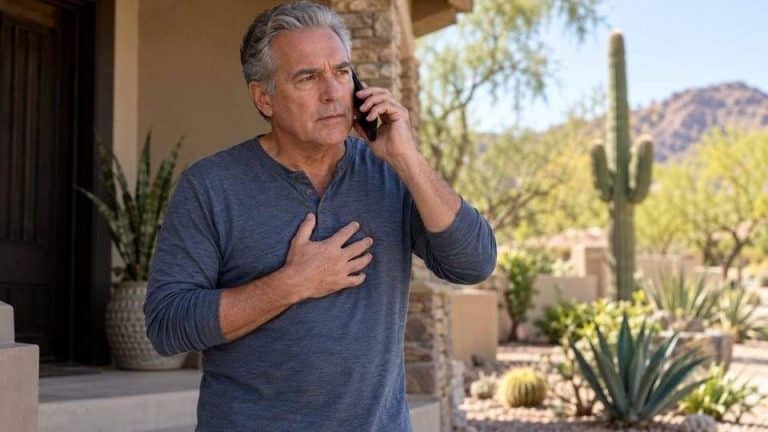

Nocturnal panic attacks are panic attacks that wake you up from sleep. You come awake fast, with your heart pounding, your breath short, and an intense fear that something is wrong. These attacks are generally reported during non-REM sleep and are not triggered by a remembered nightmare.
Panic attacks at night are common in men who have panic disorder, and they can be treated. When they keep coming back, anxiety treatment for men in Phoenix can treat the panic disorder behind them.
What Are Nocturnal Panic Attacks?

A nocturnal panic attack is the same kind of attack people have during the day. The only difference is that it starts while you are asleep. The National Institute of Mental Health (NIMH) describes panic attacks as abrupt episodes of fear, distress, or loss of control that may happen without an obvious threat [1].
What Waking Up in Panic Feels Like
The attack hits as a sudden awakening. Your heart is pounding, and you have an overwhelming sense that something bad is about to happen. The physical sensations are the same symptoms you would get in a daytime attack, such as:
- A fast or pounding heartbeat
- Sweating, shaking, or trembling
- Trouble breathing
- Chest discomfort or lightheadedness
- A sense of impending doom or a fear of dying
How long do panic attacks last when they start in sleep? Some last only a few minutes. NIMH notes that an attack can run up to an hour or sometimes longer, and it may take a while to fall asleep again after it.
How Common Nighttime Panic Attacks Are
About 11% of Americans have a panic attack each year [2]. Panic disorder means repeated panic attacks, along with worry about the next one. Among people with panic disorder, the same source says as many as 7 in 10 also have nocturnal panic attacks.
Research suggests the share varies by study. A 2019 review of studies on people with panic disorder found that 52.1% had at least one nocturnal attack in their lifetime [3]. In the same review, 27% had one in the past month.
Why Nocturnal Panic Attacks Happen During Sleep
The exact cause is not known, but the timing of these attacks is well studied.
What Happens in the Sleep Cycle
Nocturnal panic attacks occur in non-REM sleep. That is not the REM sleep stage, which is the stage linked to vivid dreams. The 2019 review reports that these attacks generally occur around the transition between stage 2 and stage 3, as lighter sleep moves into deeper sleep.
One theory involves breathing. Breathing slows in these sleep stages, so the level of carbon dioxide rises a little. The 2019 review suggests this rise could help set off an attack, but it is still only a theory.
Some attacks strike even when you went to bed calm. Doctors call these unexpected panic attacks, because the panic response in your nervous system switches on with no clear trigger. Speed is one way to tell a panic attack vs anxiety attack, since panic peaks within minutes while anxiety tends to build slowly.
Is Nocturnal Panic a Distinct Disease Category?
The Diagnostic and Statistical Manual of Mental Disorders (DSM-5-TR) is the manual doctors use for diagnosis. It does not list nocturnal panic as its own diagnosis. Nocturnal attacks can occur with panic disorder, but a nighttime attack alone does not establish that diagnosis. Clinicians also check for medical, substance-related, and other sleep-related explanations.
A 2005 review by Craske and Tsao compared people with and without nocturnal panic [4]. The two groups looked much alike in their sleep, their subjective sleep quality, and how severe their panic was. That review did not establish nighttime attacks as a separate, uniformly more severe form of panic disorder. It does not mean they are mild, and later research links disturbed sleep with greater symptom burden.
Nocturnal Panic vs Nightmares, Night Terrors and Sleep Apnea
Several sleep disorders can look like nocturnal panic, and Craske and Tsao note that doctors need to rule them out. The racing heart and fear described in our guide to what a panic attack feels like can show up in some of them too. This table shows how they usually differ:
| Event | When It Happens | What You Notice |
|---|---|---|
| Nocturnal panic attack | Usually non-REM sleep, around stages 2 to 3 | Fully awake and alert, with physical symptoms you remember |
| Nightmare | REM sleep, usually late in the night | Alert quickly, with a clear memory of a frightening dream |
| Night terrors (sleep terrors) | Deep non-REM sleep | Confused and hard to reach, often with no memory of it |
| Sleep apnea | Breathing stops and starts during sleep | Gasping for air, often with loud snoring |
In nightmare disorder, frightening dreams wake a person again and again. The fear comes from the dream’s story, while nocturnal panic has no dream behind it. Night terrors are also more common in children, while nocturnal panic attacks mainly affect teens and adults.
Sleep apnea can be treated, and it is listed as a risk factor for nocturnal panic. If a partner hears loud snoring or pauses in your breathing, ask a doctor about a sleep study. A sleep medicine specialist uses this overnight test to diagnose sleep apnea.
Drinking, Withdrawal and Waking Up Anxious

Alcohol can cause symptoms that are easy to mistake for night panic. A man who drinks in the evening may wake the next morning shaky and on edge. That pattern is often called hangxiety.
Withdrawal after heavy drinking is a bigger risk, and its symptoms can include the ones below. They often start within 8 hours after the last drink, but can begin days later. Symptoms tend to peak between 24 and 72 hours, and some can last longer [5].
- Anxiety or nervousness
- A rapid heart rate
- Sweating and clammy skin
- Insomnia and nightmares
Withdrawal is not a nocturnal panic attack, and it needs different care. If you drank heavily and just stopped, MedlinePlus says to call a provider right away or go to the emergency room. Call 911 for seizures, fever, severe confusion, hallucinations, or an irregular heartbeat.
NIMH notes that panic disorder is commonly linked with alcohol misuse. Some men drink to quiet their panic symptoms, and over time that can make both problems worse. Alcohol is one of several substances and stressors that can trigger panic.
What Helps With Nighttime Panic
Treatment for nocturnal and daytime panic is the same, and a few steps can help in the moment.
During a Nocturnal Panic Episode
When a nocturnal panic episode hits, try to let it pass instead of fighting it. Relaxation techniques, like deep breathing or relaxing your muscles, may make an attack less intense. These steps put that advice into practice:
- Sit up, turn on a low light, and remind yourself that panic attacks themselves are not life-threatening.
- Take slow, gentle breaths without forcing large inhalations.
- Tense and then relax one muscle group at a time.
Chest pain changes the plan. The signs of a panic attack vs heart attack overlap too much to sort out at home. Treat chest pain as an emergency until a clinician rules out the heart, so call 911 and do not drive yourself.
Treatment and Sleep Habits
NIMH calls cognitive behavioral therapy (CBT) the “gold standard” for panic disorder. This talk therapy works on the thoughts and habits behind panic, often with relaxation exercises and breathing training. Craske and Tsao also found support for CBT in nocturnal panic.
A doctor can also prescribe medication. Antidepressants called selective serotonin reuptake inhibitors (SSRIs) and SNRIs can help, but they may take several weeks to work. Benzodiazepines work fast, but some people become dependent on them, so doctors usually prescribe them only for a short time.
Broken sleep and panic can turn into a vicious cycle, because waking in a panic makes a good night’s sleep hard to get. Ongoing sleep loss can make concentration and anxiety harder to manage. These habits support sleep and overall mental health, although they are not proven ways to prevent every nocturnal panic attack:
- Eating a healthy diet
- Cutting back on caffeine
- Getting regular exercise
- Managing stress, for example with meditation or tai chi
Going to bed and waking up at the same time each day also supports steadier sleep. If insomnia lingers, a type of CBT built for insomnia (CBT-I) is usually the first treatment doctors recommend.
Start with your regular doctor, who can do a physical exam and refer you to a mental health professional. A full check matters because panic disorder can come with other conditions. NIMH lists post-traumatic stress disorder, obsessive-compulsive disorder, and bipolar disorder among them.
Frequently Asked Questions About Nighttime Panic
Can You Have a Panic Attack in Your Sleep?
A panic attack can start while you sleep and wake you up. You wake fully alert, with the same panic attack symptoms as a daytime attack, like a racing heart and an intense feeling of fear. A panic attack while sleeping is more likely if you also have daytime panic attacks or depression.
Why Do I Wake Up at 3 a.m. With Anxiety?
Many things can wake you up anxious in the early morning. Nocturnal panic, sleep apnea, stress, and poor sleep can all do it, and so can drinking or alcohol withdrawal. If it happens often, keep a short log of your nocturnal episodes, including alcohol and caffeine, and bring it to a doctor.
Are Nocturnal Panic Attacks Dangerous?
Panic attacks themselves are not life-threatening, according to NIMH, and nighttime attacks are no different. The larger risks are lost sleep and missing a real medical problem. Treat chest pain as an emergency until a clinician rules out a heart attack, and call 911 rather than driving.
Can Drinking Cause Night Panic Attacks?
Alcohol can trigger or worsen panic attacks. Withdrawal also causes anxiety, a rapid heart rate, sweating, and nightmares that can feel like night panic attacks. If you drink heavily and want to stop, talk with a doctor first, because withdrawal can be dangerous.
Getting Help for Nocturnal Panic
Nocturnal panic attacks can be treated, and help can start with one phone call. Into Action Recovery offers anxiety and dual diagnosis treatment for men who live with panic disorder and the drinking that often comes with it.
If you are in crisis, call or text 988. For help finding treatment, call the SAMHSA National Helpline at 1-800-662-4357, and in an emergency, call 911.
This article is for informational purposes only and is not a substitute for professional medical advice, diagnosis, or treatment. If you think you may be having a medical emergency, call 911. If you are in crisis, call or text 988.
Sources
- National Institute of Mental Health. Panic Disorder: What You Need to Know. Revised 2025. https://www.nimh.nih.gov/health/publications/panic-disorder-when-fear-overwhelms
- Cleveland Clinic. Nocturnal Panic Attacks. Last updated April 16, 2022. https://my.clevelandclinic.org/health/diseases/22776-nocturnal-panic-attacks
- Belleville G, Potočnik A. A Meta-Analysis of Sleep Disturbances in Panic Disorder. In: Psychopathology: An International and Interdisciplinary Perspective. IntechOpen; published May 31, 2019. https://www.intechopen.com/chapters/67142
- Craske MG, Tsao JCI. Assessment and treatment of nocturnal panic attacks. Sleep Medicine Reviews. 2005;9(3):173-184. https://doi.org/10.1016/j.smrv.2004.11.003
- MedlinePlus Medical Encyclopedia. Alcohol withdrawal. Reviewed January 1, 2025. https://medlineplus.gov/ency/article/000764.htm