
Ibuprofen and alcohol are two of the most commonly used substances among adults. One is a widely available pain reliever. The other is a regular part of social life. But combining them carries a danger that most people underestimate. An alcohol rehab program can help you build a healthier foundation, if your relationship with drinking has become difficult to manage, a. If the reason you are looking this up is that the headaches and stomach pain after drinking have become part of the routine, that pattern has a real answer, and Into Action Recovery is built for men ready to address the drinking instead of just managing what it does to them.

How Ibuprofen Works as a Pain Reliever
Ibuprofen works by blocking COX-1 and COX-2 enzymes, which produce prostaglandins in the digestive system. These prostaglandins help protect the stomach lining and regulate acid production throughout the digestive tract.
When you take ibuprofen tablets, the drug reduces inflammation and helps relieve pain. However, it also lowers the protective barrier in your stomach. This is why even routine ibuprofen use can cause stomach aches and irritation on its own. Pain relief from this drug is effective, but it carries meaningful consequences when misused.
Common Brand Names and Forms
Ibuprofen is sold under several brand names, including Advil, Motrin, and Midol. It comes in standard ibuprofen tablets, liquid gel capsules, and suspension forms. Regardless of the form, the active ingredient and the associated concerns remain the same.
Men’s Treatment in Arizona
Find the Right Level of Care
Residential Treatment Program
Live on-site in a men-only inpatient setting in Laveen Village. During treatment, we focus on structure, brotherhood, and clinical care built for lasting sobriety.
Tour Our Phoenix CenterIntensive Outpatient Program
Continued care for men who need real accountability while keeping work and home life intact. A strong step down from residential or a serious starting point.
Explore the Scottsdale IOPWhy Mixing Ibuprofen and Alcohol Is Dangerous
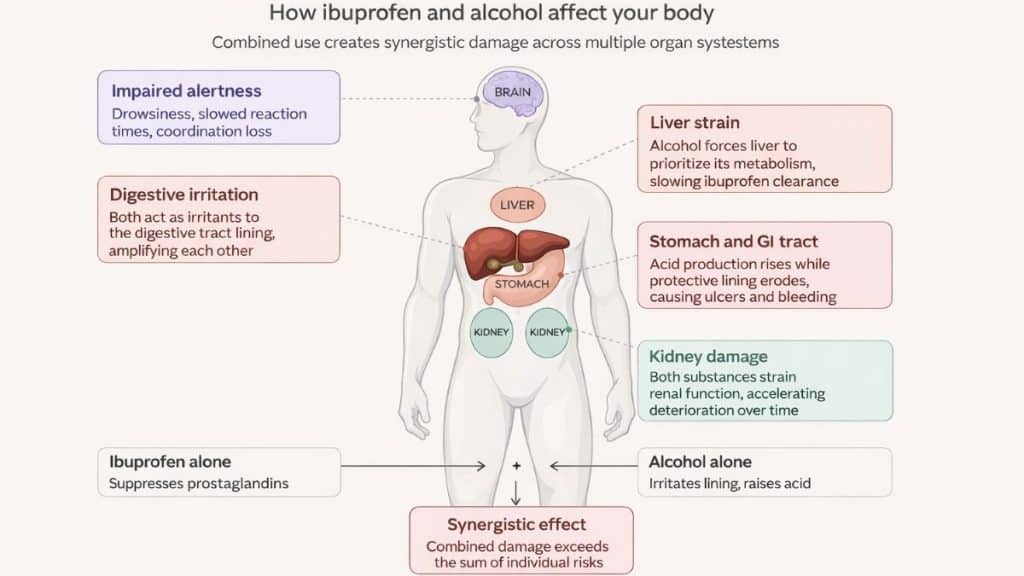
Mixing ibuprofen and alcohol creates a synergistic effect, meaning the combined damage is greater than the sum of its parts. Both substances act as a digestive irritant, and together they amplify harm to the digestive tract, kidneys, and liver.
Both ibuprofen and alcohol reduce the protective mechanisms of the stomach lining. When consumed together, acid production increases while the body’s ability to repair itself decreases. Adding alcohol to an already compromised digestive tract is what makes this combination so concerning. This places cumulative strain on multiple organ systems at once.
Ibuprofen is not the only common medication that becomes dangerous when paired with drinking, and our guide to benzodiazepine dependence covers another class of widely prescribed drugs that turn into a medical emergency when mixed with alcohol.
Gastrointestinal Bleeding and Digestive Tract Damage
Mixing ibuprofen and alcohol can significantly increase the risk of gastrointestinal bleeding, especially with higher doses. The medication suppresses protective prostaglandins while drinking irritates the digestive tract.
The chance of developing stomach ulcers and internal bleeding rises when pairing ibuprofen with alcoholic beverages, particularly for those who drink regularly or take high doses. Warning signs include severe abdominal pain, vomiting material resembling coffee grounds, or black and tarry stools. These may indicate bleeding inside the GI system and require immediate medical attention. Upper GI bleeding is among the most dangerous adverse effects. Men dealing with chronic drinking patterns should read this complete guide to alcohol addiction.
Kidney Damage from Long Term Ibuprofen and Alcohol Use
Long term ibuprofen combined with heavy drinking can impair kidney function. Both substances place additional strain on the kidneys, especially in those with pre-existing kidney disease.
Frequent use of the drug alongside regular drinking alcohol compounds the burden on renal function. Kidney issues may not present obvious symptoms early on, making this one of the more dangerous health problems linked to ibuprofen use. Those with existing kidney problems should consult a healthcare provider before pairing any NSAID with alcoholic drinks.
Decreased Alertness and Slowed Reaction Times
Both ibuprofen and alcohol can cause lethargy and decreased alertness, and their combined effects can impair coordination. This means slowed reaction times while driving become a genuine safety concern.
Taking ibuprofen while consuming alcohol can also increase the likelihood of falling asleep at inappropriate times. These harmful side effects are often overlooked.
The Impact of High Doses with Alcohol Consumption
When the medication is taken at high doses alongside drinking alcohol, every complication multiplies. Taking ibuprofen alongside drinks impairs the liver’s ability to metabolize both substances, leading to prolonged exposure at higher ibuprofen doses.
The liver prioritizes metabolizing one substance over the other, which can slow clearance of the drug. Ibuprofen levels stay elevated longer than expected, and it continues acting as a digestive irritant beyond its normal duration. Heavy ibuprofen use combined with large doses creates conditions for liver damage.
Individuals taking ibuprofen daily for chronic pain and heavy drinkers are at higher risk of complications. If pain management requires daily medication, consult a healthcare professional about treatment options.
Who Faces Higher Risk When Mixing Alcohol with This Medication
Certain groups face a higher risk. Older adults, individuals with liver disease, and those with a history of stomach problems or gastrointestinal bleeding are especially vulnerable.
People who use ibuprofen regularly and also engage in moderate alcohol consumption should be cautious. The relative risk increases with each additional factor.
How Alcohol Consumption Affects Ibuprofen Processing
Alcohol typically takes several hours to clear from the body, competing with other substances for the liver’s metabolic pathways. Mixing alcohol with this NSAID forces the liver to struggle with processing everything at once.
This competition means the body cannot process ibuprofen at its normal rate. Elevated levels lead to prolonged digestive system exposure. Both alcohol and ibuprofen tax the kidneys, accelerating kidney damage in vulnerable individuals.
Is Taking Ibuprofen Occasionally While Drinking Alcohol Safe?
According to NHS guidelines, drinking small quantities while taking the medication is usually safe, but users should never exceed the recommended dosage. For most healthy adults, taking an occasional dose after one or two drinks is generally safe.
However, the safest approach is to avoid this combination altogether. Consuming alcohol shortly after taking ibuprofen raises the risk of stomach irritation and digestive system discomfort. Even moderate alcohol paired with this drug carries some increased risk.
If you find yourself regularly pairing these substances, that pattern may signal a deeper issue.
How Long Should You Wait Before Drinking Alcohol After Ibuprofen?
Health authorities recommend waiting at least 6 to 8 hours after taking ibuprofen before consuming alcohol to reduce the risk of gastrointestinal irritation. For most healthy adults, waiting at least 10 hours is advised to minimize adverse effects.
Your body needs time to process the medication. When drinking happens shortly after taking ibuprofen, gastrointestinal irritation and bleeding risk increase significantly.
You should also never exceed the recommended dosage, regardless of how long you wait.
Ibuprofen and Alcohol: A Comparison of Combined Effects
| Category | Ibuprofen Alone | Drinking Alone | Both Together | Most Vulnerable |
| GI Bleeding | Moderate concern with frequent use | Moderate concern with heavy drinking | Significantly elevated | Older adults, ulcer history |
| Kidney Damage | Increases with long term ibuprofen and high doses | Concern with chronic heavy use | Cumulative strain accelerates harm | Individuals with kidney issues |
| Liver Strain | Low concern at standard doses | Elevated concern with heavy consumption | Impaired metabolism of both | Those with liver disease |
| Alertness | Mild drowsiness possible | Significant impairment | Combined effects amplify impairment | Anyone operating machinery |
Warning Signs That Require Medical Attention
If you experience severe stomach aches, vomiting dark material, black stools, or signs of bleeding inside the GI system, seek help immediately.
Professional medical advice should also be sought for persistent health problems or changes in urination that suggest kidney issues. Internal bleeding can escalate quickly without intervention.
When Alcohol Use Becomes a Bigger Health Problem
If you find yourself frequently pairing NSAIDs with drinks, or if your habits are causing health problems, it may be time to seek support. Recognizing the signs of problem drinking early can make a significant difference. Needing pain relief after heavy sessions or relying on ibuprofen to manage discomfort caused by alcohol consumption are warning signs.
Men who hide their struggles often experience deeper emotional patterns that go unaddressed. Understanding the difference between an alcoholic vs a heavy drinker brings clarity.
Alcohol use affects your brain, hormones, and overall well-being. Heavy drinking impacts testosterone levels in men and can cause brain damage that takes months to heal. For men in the Phoenix metro area recognizing the pattern early, our intensive outpatient program in Scottsdale provides the kind of structured therapy and accountability that intervenes before drinking causes serious GI, liver, or kidney damage.
Treatment Programs and Recovery Options
Individuals with pre-existing conditions should consult a healthcare professional before mixing ibuprofen with drinking, as they face a higher risk. If drinking itself has become difficult to control, treatment programs offer multiple treatment options. For men whose drinking has reached the point where outpatient is no longer enough, our Phoenix residential treatment program provides medical supervision, structured days, and the brotherhood-based program needed to stop the damage from accumulating any further.
Recognizing the signs early matters. Functional alcoholism can mask serious issues for years. Learning about the withdrawal timeline, delirium tremens, and seizure concerns is essential for those at risk.
If you are ready to take the next step, rehab for drinking provides a safe environment to begin healing.
Frequently Asked Questions About Ibuprofen and Alcohol
Can I have one drink while taking ibuprofen?
For most healthy adults, one drink after taking ibuprofen at the standard dose carries a low relative risk. However, even moderate drinking can irritate the stomach lining when combined with this NSAID. The safest option is to wait until your body has fully processed the drug.
How long does it take to clear ibuprofen from your body?
It generally takes around 10 hours for your body to fully clear ibuprofen. Experts recommend waiting this full period before drinking. Ibuprofen levels gradually decline as the medication is metabolized.
What are the most dangerous effects of combining ibuprofen and drinking?
Combining ibuprofen with heavy drinking significantly increases the risk of severe gastrointestinal bleeding, stomach ulcers, and kidney or liver damage.
Is ibuprofen safer than other pain relievers when drinking alcohol?
No NSAID is completely safe when paired with alcoholic beverages. Each medication carries different risk profiles. A healthcare provider can recommend the safest pain management approach for your circumstances.
What should I do if I accidentally mixed ibuprofen and alcohol?
If you took the drug and then drank, monitor yourself for upset stomach, dizziness, or any warning signs. Avoid taking more ibuprofen and seek professional medical advice if symptoms develop.